
Portland Timbers Jersey History: From NASL to MLS
Introduction
The Portland Timbers jerseys are more than just sportswear. They are woven with the club’s history, culture, and identity. From the scrappy beginnings of the 1970s NASL to the polished, symbol-rich designs of today’s MLS, each kit tells a story of Portland’s passion for soccer.
Fans and jersey collectors alike understand that every color, pattern, and patch on a Timbers shirt carries meaning. Some reference club legends, others echo city symbols, supporter chants, or defining moments in time.
How have the Timbers’ jerseys changed over the decades?
What makes specific designs iconic or beloved?
Why do the colors green and gold carry such deep meaning in Portland?
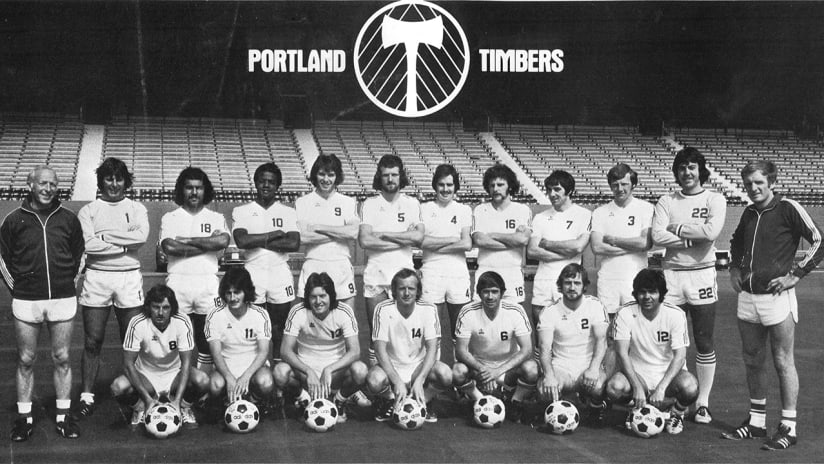
This comprehensive journey explores the whole evolution of Portland Timbers kits—from the plain polyester shirts of the NASL era to the modern, narrative-driven uniforms of the MLS era—highlighting how design, material, sponsorship, and supporter culture shaped each generation.
The story begins in 1975, when a brand-new team had only weeks to define its identity. It moves through periods of success, disappearance, revival in lower leagues, and eventual rebirth on Major League Soccer’s biggest stage. Across every era, one element has remained constant: the commitment to green and gold, colors that are uniquely associated with the Timbers in a sport often dominated by red and blue.
NASL Era (1975–1982): Green and Gold Origins
A Club Built in Weeks
When the Portland Timbers joined the NASL in 1975, the club had to build its identity almost overnight. The name “Timbers” was selected through a fan vote, and the colors green and gold were finalized just two months before the first match.
With little time to prepare, the inaugural uniforms were simple but immediately symbolic.
The First Timbers Jersey
The first kit worn at Civic Stadium was a plain white Adidas jersey featuring:
- Forest-green numbers
- Three green Adidas stripes down the sleeves
- Adidas trefoil logo on the right chest
- Player number on the left chest
The shirts were paired with extremely short shorts, a defining feature of 1970s soccer fashion.
Despite the minimalist look, the kit became legendary when the Timbers reached the Soccer Bowl final in their inaugural season. Fans wore the white jersey proudly as a symbol of instant success.
Early Variations and Color Commitment
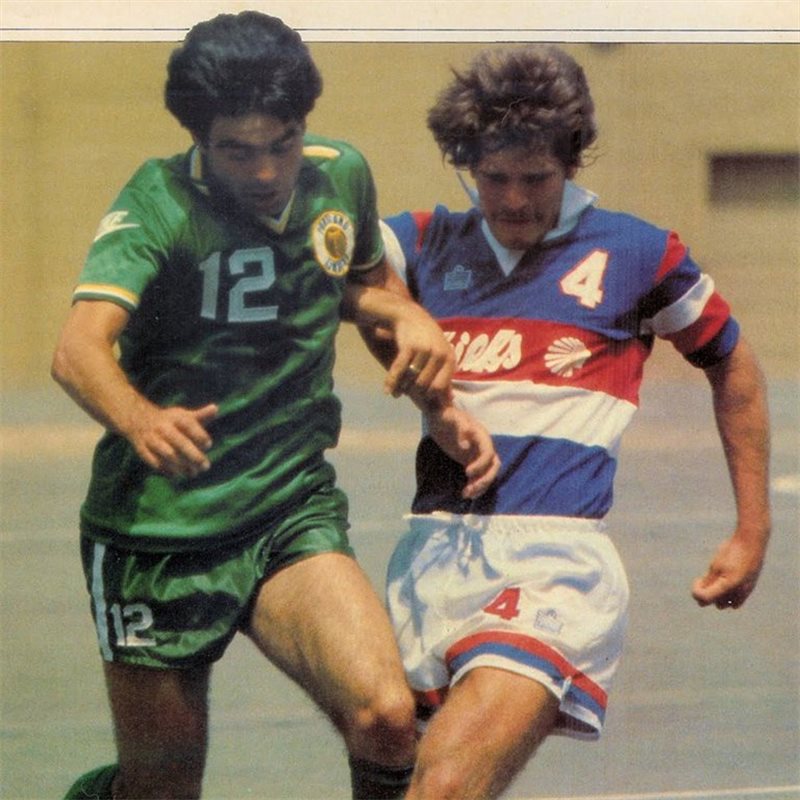
Later in 1975, the club introduced a green change kit with gold numbers and player names. This established a visual rule that would persist for decades: Portland would always wear some combination of green, white, and gold.
During the NASL years, Portland stood out as the only club to consistently maintain this palette while other teams frequently changed colors. That consistency helped cement a strong visual identity.
Key Features of NASL-Era Jerseys
Basic but Bold Design
NASL Timbers kits were plain by modern standards. Solid colors, limited trim, and minimal graphics defined the era. Yet this simplicity allowed the green-and-gold identity to stand out clearly.
Adidas Origins and Local Supply
Early kits featured Adidas branding, but due to budget and time constraints, uniforms were sourced locally. Some shirts were produced by regional manufacturers, tying the club’s look directly to the Portland community.
Ever-Shorter Shorts
Players often joked about the extremely long shorts. While humorous in hindsight, they became part of the visual memory of the NASL era.
Introduction of Collars
As the 1970s progressed, jerseys began to feature collars—sometimes wide and dramatic, sometimes modest. Green or gold trim added a subtle European influence.
The Historic 1979 Nike Jersey
In 1979, the Timbers made global soccer history by becoming the first club ever to wear Nike kits.
This jersey featured:
- Predominantly white base
- Large green-and-gold collar
- The Nike swoosh is placed on the sleeve instead of the chest
The design was distinctive, but its historical importance made it iconic. It marked Nike’s first step into soccer and symbolized a uniquely Portland partnership between a local team and a local brand.
Playing Conditions and Fabric Reality
Performance technology was virtually nonexistent. Jerseys were made of heavy polyester that absorbed water and trapped heat. Players often described feeling soaked and weighed down, especially in the rain.
Despite the discomfort, players and fans alike embraced the kits. Simply wearing the Timbers crest mattered more than comfort.
By the time the NASL folded in 1982, Portland’s green-and-gold identity was firmly established. Those early jerseys laid the foundation for everything that followed.
Between Eras (1983–2010): Keeping the Colors Alive
Post-NASL Revival Attempts
After 1982, Portland’s professional soccer presence paused but never disappeared entirely. A brief revival occurred in the late 1980s, keeping the Timbers’ name and colors visible.
While short-lived, this era coincided with early advancements in fabric technology, including the use of lighter materials and basic moisture control.
The USL Era Begins (2001)
The true revival came in 2001, when the Timbers returned as a second-division club.
Key characteristics of this period included:
- Dark green home kits
- White away kits
- Traditional collar designs
- Conservative aesthetics
The visual continuity made the team instantly recognizable to long-time supporters.
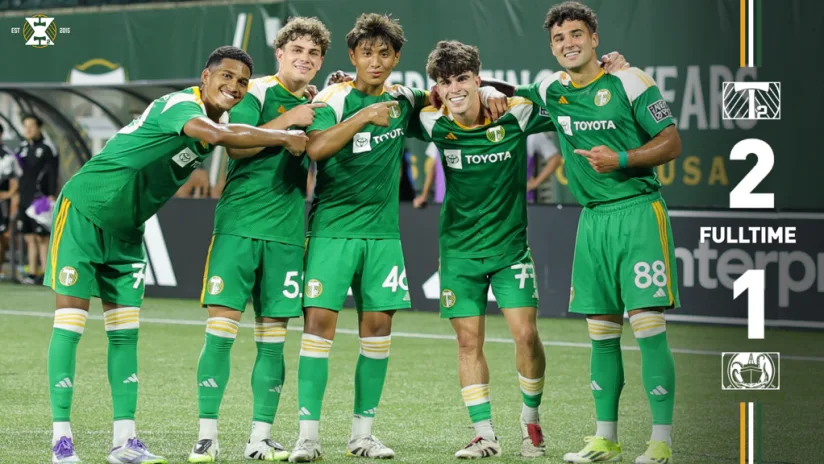
Introduction of Shirt Sponsors
For the first time in club history, corporate sponsors appeared on the front of jerseys. These logos reflected the realities of modern soccer economics.
Sponsors were carefully integrated, maintaining a balance with the club’s traditional look.
Design Experimentation
2003 Hooped Jersey
In 2003, the Timbers introduced a green and white hooped jersey. This was the only striped design in club history at the time.
Fan reactions were mixed, but the kit demonstrated a willingness to experiment while respecting tradition.
Third Kits (2007–2010)
Late in the USL era, Portland introduced third kits:
- Bright yellow to emphasize “gold.”
- Deep wine red inspired by Oregon pinot noir
- Black kits with green and gold accents
These designs added variety without replacing the core green home identity.
By 2010, the Timbers had preserved their visual DNA across leagues and generations, setting the stage for MLS.

MLS Era (2011–Present): Tradition Meets Innovation
A Bold MLS Debut
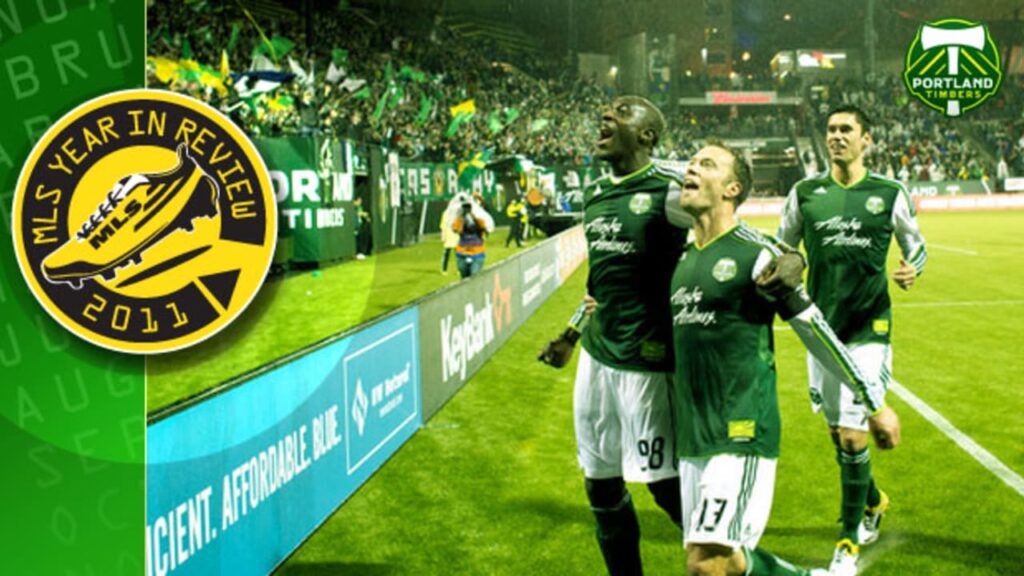
The 2011 MLS debut kit redefined the Timbers’ jersey design.
The home jersey featured:
- Two-tone green split design
- White sleeves
- Subtle gold accents
This bold look honored tradition while announcing a new era.
Embedding City Identity
The red “Rose City” away kit paid tribute to Portland’s nickname with:
- Rose and thorn graphics
- Special Rose City crest
- Textured fabric patterns
Local identity became a defining feature of MLS-era kits.
Long-Term Sponsorship Stability
A consistent front-of-shirt sponsor appeared from 2011 onward, becoming a familiar part of the jersey’s visual identity. The sponsor often adapted its logo to match retro or anniversary designs.
Homage to History: Third Kits and Anniversaries
2012 Heritage Third Kit
- All-white throwback
- Vintage collar and crest
- Retro typography
- Produced locally using recycled materials
2014 Green & Gold Third Kit
- Inspired by supporter chants
- Lyrics printed inside the collar
- Crossed axes and supporter symbols
2015 “5/40” Anniversary Kit
- Triple chevrons representing NASL, USL, MLS
- Fan chant printed inside the collar
- Worn during MLS Cup victory
2023 Portland Plaid Kit
- Plaid pattern inspired by Pacific Northwest culture
- Symbolized community unity
- Integrated logging and teamwork motifs

2025 “Forever Green & Gold” Kit
- Tree-ring pattern marking 50 years
- Embedded historical milestones
- Gold accents celebrate the anniversary
Culture in Cloth: Fan and Community Elements
Core Visual and Cultural Themes
Green and Gold Identity
These colors represent forests, longevity, unity, and club heritage.
Supporter Chants
Hidden messages and slogans connect players and fans on an emotional level.
Community Commitment
Symbols like crossed axes and unity phrases reflect off-field values.
Technological Evolution
Modern kits emphasize sustainability, performance, and comfort.
Iconic Portland Timbers Jerseys
- 1975 all-white inaugural kit
- 1979 Nike’s first soccer kit
- 2003 hooped jersey
- 2011 two-tone MLS debut
- 2012 heritage throwback
- 2014 green-and-gold tribute
- 2015 Chevron MLS Cup kit
- 2023 plaid community kit
Each represents a distinct chapter in club history. To purchase, please contact soccerjerseyca customer service.
Conclusion: Threads of Tradition and Identity
From the NASL to MLS, Portland Timbers jerseys tell a continuous story of identity, resilience, and community pride.
Each era introduced new materials and ideas, but the core values never changed. Green and gold remain constant. Symbols grow richer. Stories deepen.
Wearing a Timbers jersey means wearing history—past, present, and future—stitched into every seam.
FAQ: Portland Timbers Jerseys
What colors have the Portland Timbers always used?
The Portland Timbers have consistently used green and gold as their core colors since their founding in 1975. Green represents Oregon’s lush forests and Portland’s nickname as the “Emerald City,” while gold adds contrast and symbolizes unity and pride. These colors are foundational to the club’s identity and have been present in nearly every primary kit.
Which Timbers jersey is the most iconic?
Several jerseys stand out, but the 1979 Nike kit (Nike’s first-ever soccer jersey), the 2011 MLS debut kit with its two-tone green design, and the 2014 third kit with green and gold plus retro flourishes are often considered the most iconic. Each of these kits combined design innovation with historical or cultural meaning.
Have the Timbers ever worn a red jersey?
Yes. The Timbers introduced a red away kit in 2011 called the “Rose City Red” jersey. It honored Portland’s nickname and included thorn motifs and a special Rose City crest. The red jersey became a staple secondary kit in following seasons.
Who have been the main kit sponsors?
The longest-standing sponsor was Alaska Airlines (2011–2023). In 2024–2025, Tillamook Creamery appeared as the jersey sponsor. Starting in 2026, Bank of America is set to become the new front-of-shirt sponsor.
Are there any jerseys inspired by Portland’s culture?
Absolutely. Several kits reflect Portland’s identity – from the Rose City red jersey to the Portland Plaid (2023), which symbolized community and unity, and the 2025 jersey with 50 tree rings representing each year of the club’s history.